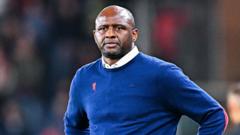

DAKAR — In a landmark appointment that sends a resonant wave across the landscape of African football, Patrick Vieira has officially assumed the mantle of head coach for the Senegal men's national team. The arrival of the former Arsenal captain and French World Cup winner marks a profound strategic pivot for the Senegalese Football Federation, signaling an ambitious intent to transition the reigning powerhouse of West African football into a globally feared tactical juggernaut. As the Lions of Teranga look toward upcoming continental defenses and the grueling qualification cycles for the global stage, the acquisition of a manager with Vieira’s elite pedigree establishes an unprecedented benchmark for ambition within the Confederation of African Football.
The announcement, finalized following weeks of exhaustive deliberations in Dakar, concludes a meticulous search for a leader capable of harnessing one of the most talented talent pools on the African continent. Vieira inherits a squad steeped in recent successes, including their historic Africa Cup of Nations triumph and consistent appearances at the FIFA World Cup. Yet, the expectations surrounding the national side have never been higher. The federation's leadership recognized that maintaining dominance required not merely continuity, but a radical elevation in tactical sophistication, man-management at the highest professional tiers, and a global network capable of scouting and nurturing dual-national prospects.
Vieira’s transition to the international arena represents a fascinating evolution in his managerial career. Having previously cut his teeth in the rigorous environments of European club football—spanning stints with New York City FC in Major League Soccer, OGC Nice and RC Strasbourg in France's Ligue 1, and Crystal Palace in the English Premier League—the 48-year-old tactician steps into the unique pressures of international management. Unlike club football, where daily contact facilitates iterative tactical implementation, the national team coach must operate within the compressed timelines of international windows, demanding immediate cohesion, psychological acumen, and an innate ability to distill complex tactical instructions into easily digestible concepts for players arriving from diverse club environments.
A Strategic Vision for West African Football
The structural implications of Vieira’s appointment extend far beyond the senior men's squad. Within the corridors of the Senegalese Football Federation, there is a shared understanding that modern footballing dominance is built upon a foundation of holistic structural development. Vieira's extensive experience within elite European academies—most notably his formative years overseeing Manchester City’s Elite Development Squad—endows him with a profound appreciation for youth development pathways. His arrival is anticipated to foster tighter integration between the domestic leagues, regional academies, and the diaspora networks that continually feed the national team pipeline.
Senegal has long been recognized as a prolific exporter of footballing talent, with scouting networks across Europe constantly scouring local academies and urban centers in Dakar for the next generation of stars. However, translating this raw, explosive potential into cohesive, tactically disciplined units on the international stage has occasionally presented challenges. Vieira's tactical philosophy, which typically emphasizes a structured buildup, disciplined defensive shapes, and fluid attacking transitions, is expected to provide a cohesive framework that can be mirrored across various age groups. By establishing a unified playing philosophy from the youth ranks up to the senior team, the federation hopes to cultivate a sustainable ecosystem that minimizes the transitional friction typically experienced when young players step into the senior international spotlight.
Furthermore, the appointment carries significant geopolitical and cultural weight within the broader context of African football. The trend of appointing high-profile European managers with African heritage—or prominent African legends—has accelerated in recent years, signaling a maturation of the sport on the continent. Vieira, born in Dakar before moving to France at a young age, occupies a unique cultural intersection. His deep personal roots in Senegal provide an authentic connection to the nation’s social fabric, mitigating the cultural friction that has historically plagued foreign managers attempting to navigate the intricate social dynamics of African national squads. At the same time, his extensive career at the absolute zenith of European football grants him an inherent authority that commands the immediate respect of professional players plying their trade in the UEFA Champions League and top European domestic leagues.
Tactical Anatomy: What Vieira Brings to the Lions of Teranga
To fully comprehend the magnitude of this appointment, one must analyze Vieira’s tactical evolution as a manager. During his tenure in the English Premier League with Crystal Palace, Vieira discarded rigid structural dogmas in favor of a pragmatic, dynamic 4-3-3 or 4-2-3-1 system that prioritized defensive solidity without sacrificing verticality. His teams are characterized by high-intensity pressing, compact central blocks, and a reliance on technically gifted central midfielders who can dictate the tempo of the game—a role Vieira himself mastered during his illustrious playing days.
For Senegal, this tactical blueprint fits like a glove. The backbone of the national team features world-class talent in every vertical line of the pitch. In central midfield, the squad boasts physically imposing and technically proficient operators who possess the exact profile Vieira historically demands of his engine room. By instilling a more structured, possession-oriented approach combined with calculated defensive transitions, Vieira aims to resolve the occasional bouts of offensive predictability that have hampered Senegal against deeply entrenched defensive blocks in continental competitions.
Moreover, Vieira’s emphasis on positional discipline and tactical flexibility will be crucial when facing elite global opposition. In major international tournaments, margin for error is razor-thin, and structural lapses are ruthlessly punished. Vieira’s tactical rigor, forged in the tactical crucible of Italian and English football under legendary managers such as Arsène Wenger and Fabio Capello, instills a defensive resilience that complements the natural flair and athleticism of Senegalese players. The challenge will lie in implementing these intricate schemes swiftly during brief international training camps, requiring exceptional communication and immediate buy-in from senior squad leaders.
Economic and Commercial Ripple Effects
Beyond the tactical and competitive dimensions, the appointment of a globally recognized figure like Patrick Vieira carries profound economic and commercial ramifications for the Senegalese Football Federation and the nation's broader sports economy. In the modern era, international football is not merely a athletic pursuit; it is a multi-million-dollar enterprise driven by sponsorship, broadcasting rights, and global brand visibility. The presence of a world-renowned manager instantly elevates the commercial valuation of the national team brand on the international stage.
Global sportswear manufacturers, multinational corporations, and media syndicates monitor high-profile managerial appointments closely as indicators of market potential. Vieira’s global recognition—stemming from his legendary status in the English Premier League, Serie A, and international football—creates an immediate bridge for international partnerships. This enhanced commercial profile is expected to translate into lucrative sponsorship deals, improved broadcasting revenue shares, and increased investment in domestic football infrastructure.
Domestically, the ripple effects could galvanize the local sports economy. Increased visibility for the national team invariably sparks a surge in merchandise sales, local viewership, and grassroots participation. For young athletes across Senegal, seeing a global icon return to lead their national side serves as a powerful psychological catalyst, reinforcing the belief that the nation is a premier destination for elite footballing excellence. This heightened interest can attract private sector investments into domestic academies, stadium upgrades, and youth leagues, creating a virtuous economic cycle that benefits the entire footballing ecosystem.
Global Perspectives and Continental Reactions
The international media and footballing fraternity have reacted to Vieira’s appointment with a mixture of fascination and profound respect. Across Europe, particularly in France and England where Vieira’s legacy as a player and manager is most deeply entrenched, sports analysts have dissected the move as a bold career step. While some traditionalists might view the transition from European club management to African international football as an unconventional trajectory, progressive analysts recognize it as a reflection of the shifting gravity within global football.
African football analysts have similarly praised the appointment, noting that it reflects a growing trend of top-tier football nations on the continent demanding world-class leadership to match their soaring ambitions. The days of treating African national teams as stepping stones or secondary assignments are rapidly receding; modern federations are securing elite managerial talent capable of competing on equal footing with European and South American powerhouses. Vieira’s decision to take charge of Senegal validates the competitive allure of African international football, showcasing the continent as a premier theater for high-stakes coaching battles.
Competitors within the Confederation of African Football are undoubtedly taking note. Traditional powerhouses such as Morocco, Egypt, Nigeria, and Cameroon, all of whom perpetually vie for continental supremacy and global qualification spots, recognize that Senegal has raised the bar. The psychological impact of introducing a manager with Vieira’s winning pedigree into the West African camp shifts the psychological balance of power, putting opposing coaching staffs on notice that Senegal’s tactical preparation will henceforth meet the highest global standards.
Navigating Challenges and Managing Expectations
Despite the widespread optimism surrounding his arrival, Vieira faces a demanding path fraught with immediate challenges. Managing an international squad brings a distinct set of operational hurdles that differ vastly from the daily routine of club management. The primary obstacle is the scarcity of time; international windows offer mere days to assemble players traveling from diverse time zones, assess physical fatigue, implement tactical adjustments, and foster team cohesion before high-stakes competitive fixtures.
Furthermore, managing player egos within a star-studded squad requires supreme diplomatic skill. Vieira inherits a dressing room filled with established European club stars who are accustomed to demanding roles and tactical autonomy at their respective clubs. Balancing the collective defensive requirements of the national team with the individual brilliance of elite attackers will test Vieira’s man-management capabilities to their absolute limits. His own illustrious background as a World Cup winner and undisputed dressing-room leader will undoubtedly aid him in commanding authority, but maintaining harmony throughout a grueling qualification campaign requires continuous, transparent communication.
Public expectation in Senegal is another formidable variable. Football in Senegal is not merely a sport; it is an intrinsic part of the national identity, capable of unifying the populace and dictating the collective mood of the nation. Consequently, the tolerance for transitional struggles or experimental phases is remarkably low. Fans and media outlets demand immediate results alongside aesthetically pleasing, dominant performances. Vieira must navigate this intense societal pressure, insulating his players from external noise while executing a long-term strategic evolution.
Looking Ahead: The Road to Future Tournaments
As the initial media storm settles and the practical work of training sessions and tactical briefings begins, all eyes are firmly fixed on the horizon. The immediate mandate for Vieira is clear: secure qualification for the upcoming continental showpiece and construct a resilient, tactically flexible unit capable of making a deep, historic run at the next global tournament. The qualification pathways in Africa have grown increasingly treacherous, with the standard of competition across the continent rising exponentially as smaller nations invest heavily in their footballing infrastructure.
For Vieira personally, this appointment represents a defining chapter in his managerial trajectory. Having experienced the highs and lows of European club management, success on the international stage with a football-obsessed nation like Senegal could cement his reputation as a world-class coach capable of orchestrating triumph at the highest echelons of the sport. It is a high-risk, high-reward endeavor that demands absolute commitment, tactical ingenuity, and visionary leadership.
Ultimately, Patrick Vieira’s arrival in Dakar is more than just a managerial appointment; it is a definitive statement of intent. It demonstrates that Senegalese football is not content with resting on its past laurels, but is actively aggressively pursuing unprecedented heights of global competitiveness. As the Lions of Teranga prepare to step onto the pitch under their new leader, a new era of ambition, tactical sophistication, and national pride has officially begun. The continent, and the global footballing community, will be watching closely as this compelling chapter unfolds.