
LUSAKA — In a decisive display of electoral participation and civic engagement, the electorate of Zambia has returned President Hakainde Hichilema to office for a second consecutive term, delivering a resounding 60 percent majority in a contest that has been hailed by domestic and international observers alike as a triumph for democratic consolidation in Southern Africa.
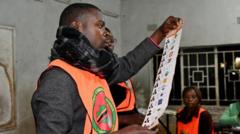
The Electoral Commission of Zambia announced the final, verified results following days of tense, meticulous tabulation across the nation's sprawling constituencies. The outcome solidifies a transformative mandate for the incumbent administration, granting President Hichilema and the United Party for National Development (UPND) the political capital necessary to press forward with ambitious, albeit challenging, structural economic reforms and governance overhauls.
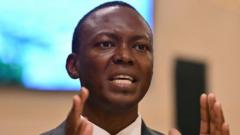
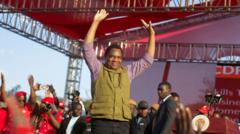
Speaking to a jubilant crowd of supporters and national media representatives at the state house following the official declaration, President Hichilema struck a magnanimous chord. Visibly moved by the outcome, he remarked that he was truly humbled by the overwhelming victory and solemnly promised to work tirelessly for every single Zambian, regardless of their political affiliation, regional background, or socio-economic status. This unifying rhetoric is seen by analysts as a crucial cornerstone for healing lingering political fractures and maintaining national cohesion in a diverse, multi-ethnic society.
The Historical Context of Zambia's 2026 Electoral Landscape
To fully comprehend the significance of this electoral outcome, one must examine the turbulent political and economic trajectory that brought Zambia to this juncture. When Hichilema first ascended to the presidency in August 2021, he inherited a nation staggering under the immense weight of a severe sovereign debt crisis, pandemic-induced economic contractions, and growing public fatigue with entrenched political corruption and institutional decay.
Zambia’s history since independence in 1964 has been characterized by a generally peaceful democratic tradition—a rare and treasured commodity in a region historically plagued by civil strife and authoritarian consolidation. From the one-party socialist era of Kenneth Kaunda to the introduction of multi-party democracy in 1991 under the Movement for Multi-Party Democracy (MMD), and through subsequent peaceful transfers of power involving the Patriotic Front (PF), Zambians have consistently used the ballot box as the ultimate arbiter of political destiny.
However, the decade preceding Hichilema's initial election saw a concerning drift toward fiscal mismanagement, characterized by heavy borrowing from foreign creditors—particularly for large-scale infrastructure projects that frequently failed to yield immediate economic returns. By the time the 2021 election arrived, Zambia had earned the dubious distinction of becoming Africa's first pandemic-era sovereign defaulter, failing to service its Eurobond obligations. The economy was defined by runaway inflation, a depreciating national currency, severe shortages of essential commodities, and high youth unemployment.
Hichilema’s landslide victory in 2021 was thus born out of desperation for change. A wealthy businessman-turned-politician who had endured years of opposition, political harassment, and multiple incarcerations, Hichilema campaigned on a platform of technocratic competence, zero tolerance for corruption, economic revival, and the restoration of the rule of law. Securing a second term with a solid 60 percent majority suggests that despite the painful, protracted nature of the subsequent economic reforms, a clear majority of Zambians believe the country remains on the right track under his stewardship.
Economic Implications and the Ongoing Debt Restructuring Battle
The central pillar of President Hichilema's first term, and the primary battleground of his administration, has been the stabilization and restructuring of Zambia's suffocating national debt. Securing this second term provides the political stability and continuity required to see these complex financial maneuvers through to their ultimate conclusion.
Upon taking office in 2021, Hichilema's administration immediately engaged the International Monetary Fund (IMF) and a disparate group of official and private creditors—ranging from Western institutional bondholders to the Export-Import Bank of China—to restructure over 13 billion dollars in external debt. These negotiations were notoriously protracted, complicated by geopolitical rivalries between Western nations and China, as well as complex legal frameworks governing sovereign bond restructuring.
The economic fallout from the debt crisis and the subsequent austerity measures has not been painless. To qualify for IMF assistance and restore macroeconomic fundamentals, the government had to implement difficult structural adjustments. These included the phasing out of costly fuel and electricity subsidies, which had previously drained the national treasury, and the rationalization of public expenditure. These measures triggered immediate spikes in the cost of living, testing the patience of an already overburdened citizenry.
With the electoral mandate now renewed, economic analysts predict that the Hichilema administration will double down on its strategy of economic diversification. While copper mining remains the lifeblood of the Zambian economy—accounting for the vast majority of its export earnings—the government has aggressively pursued policies to boost agricultural productivity, renewable energy generation, and value-addition manufacturing.
Furthermore, the continuation of the current administration provides reassurance to foreign direct investors. Mining conglomerates and international financial institutions thrive on regulatory predictability and political stability. The resounding victory reduces the risk of abrupt policy reversals, potentially unlocking a new wave of capital injection into the critical minerals sector, particularly regarding copper and cobalt, which are essential for the global transition to green energy technologies.
Regional and Geopolitical Ramifications in Southern Africa
Beyond Zambia’s borders, the smooth execution and definitive outcome of this electoral cycle carry profound geopolitical implications for the Southern African Development Community (SADC) region and the African continent at large.
In recent years, the African continent has witnessed a disturbing regression in democratic norms, marked by unconstitutional changes of government, military coups in West and Central Africa, and disputed elections characterized by state interference and civil unrest. Against this backdrop, Zambia stands out as a resilient beacon of democratic maturity. The high voter turnout, the peaceful acceptance of the process by the populace, and the orderly tabulation of results reinforce the credibility of democratic governance in a region where such outcomes are increasingly contested.
Moreover, President Hichilema has emerged as an influential diplomatic voice within SADC and the African Union. Known for his pro-market philosophy, advocacy for transparent governance, and pragmatic approach to foreign policy, Hichilema has successfully positioned Zambia as a bridge between traditional Western partners and emerging global powers. His administration has navigated the delicate geopolitical tightrope between the United States, European nations, China, and regional neighbors with considerable dexterity.
Within SADC, Zambia plays a pivotal logistical and diplomatic role. Sharing borders with eight different nations, its stability is vital for regional trade routes, food security, and collective security frameworks. The continuation of Hichilema's leadership ensures policy continuity in regional peace-building efforts, particularly regarding ongoing security challenges in neighboring regions, and fosters deeper economic integration through the African Continental Free Trade Area (AfCFTA).
Domestic Political Dynamics and the Opposition Landscape
While a 60 percent victory represents a commanding mandate, President Hichilema's second term will not be without its domestic political challenges. A thorough analysis of the electoral map reveals persistent regional voting patterns that have historically characterized Zambian politics, underscoring the ongoing need for deliberate, inclusive nation-building.
The primary opposition, spearheaded by remnants and reorganizing factions of the former ruling Patriotic Front and newly emergent political challengers, mounted a rigorous, highly competitive campaign. Opposition rhetoric frequently focused on the slow pace of tangible economic relief for the average worker, pointing out that while macroeconomic indicators such as inflation and currency stability have improved on paper, the cost of living remains stubbornly high for households in urban townships and rural farming communities alike.
In his victory address, President Hichilema appeared acutely aware of these criticisms. By emphasizing that he intends to govern for all Zambians—not just those who cast their ballots for the UPND—he signaled an understanding that sustainable governance requires bridging geographical and ethnic divides. Political scientists note that the coming years will test the administration's ability to decentralize governance further, ensuring that the fruits of economic recovery are distributed equitably across all ten provinces of the country.
Additionally, the institutional reforms initiated during Hichilema's first term—such as strengthening the independence of the judiciary, empowering anti-corruption agencies, and expanding civic space and media freedom—must be institutionalized to withstand future political transitions. Observers will be watching closely to see whether the administration uses its expanded political capital to fortify these democratic guardrails permanently.
Expert Opinions and Analytical Perspectives
Leading political economists, sociologists, and international relations experts have offered diverse analyses regarding the implications of the 2026 election results. Consensus generally centers on the idea that the Zambian electorate has prioritized long-term stability and technocratic reform over populist rhetoric.
Dr. Chansa Mwewa, a professor of political science at the University of Zambia, noted in a recent assessment that the election reflects a maturing voter base. According to Dr. Mwewa, Zambian citizens demonstrated a sophisticated understanding of the structural impediments facing the nation, recognizing that the deep-seated economic damage inflicted over the previous decade could not be undone overnight. The 60 percent majority, in her view, is less a blank check and more a vote of confidence in the trajectory of institutional rehabilitation.
From an economic standpoint, international financial analysts emphasize that the electoral outcome removes a major source of uncertainty. Financial markets have historically reacted sensitively to political transitions in developing economies. With the leadership question settled decisively and peacefully, international rating agencies and institutional investors can look toward Zambia with renewed confidence, anticipating steady implementation of fiscal consolidation policies, enhanced domestic revenue mobilization, and continued cooperation with multilateral lenders.
However, independent civil society organizations have also issued prudent caveats. While praising the peaceful conduct of the polls, local democracy watchdogs have stressed the importance of continued civic vigilance. They argue that a dominant ruling party must remain accountable to the citizenry, and that the opposition must be allowed to function freely to ensure a robust, dynamic legislative environment.
Potential Future Consequences and the Road Ahead for Zambia
As President Hichilema prepares to be sworn in for his second and final constitutional term, attention immediately turns to the formidable agenda that lies ahead. The next five years will be definitive in shaping Zambia's socio-economic destiny for generations to come.
First and foremost, the administration must translate macroeconomic stability into microeconomic relief. For the average Zambian youth—who makes up the vast majority of the population—success will not be measured by IMF commendations or GDP growth rates alone, but by job creation, affordable healthcare, quality education, and reliable infrastructure. Addressing youth unemployment through targeted vocational training, digital economy initiatives, and support for small and medium-sized enterprises (SMEs) will be the ultimate litmus test for the government's popularity.
Secondly, climate resilience has emerged as an existential priority for Zambia. Recent years have subjected the country to severe weather anomalies, including prolonged droughts that crippled hydroelectric generation at the Kariba Dam and devastated staple maize harvests. The government’s future policies must aggressively integrate climate adaptation strategies, diversify energy sources away from an over-reliance on hydropower, and modernize agricultural practices to withstand environmental shocks.
Finally, the legacy of the Hichilema presidency will rest heavily on its commitment to institutionalizing anti-corruption measures and strengthening the rule of law. The fight against graft cannot be perceived as selective or politically motivated; rather, it must be embedded within transparent procurement processes, robust judicial independence, and a culture of public accountability that outlasts any single administration.
In conclusion, the 2026 general election stands as a watershed moment for Zambia. By delivering a clear 60 percent mandate to President Hakainde Hichilema, the Zambian people have chosen a path of continuity, reform, and democratic resilience. As the nation closes this electoral chapter and looks toward the horizon, the eyes of the continent and the wider international community remain fixed on Lusaka, watching a vibrant democracy write its next chapter.