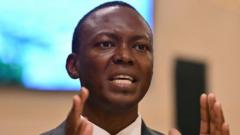

The political landscape of Chad has shifted dramatically following a high-stakes presidential pardon that vacates a 20-year prison sentence for the nation's most prominent opposition figure, Succès Masra. This consequential development, unfolding against a backdrop of delicate democratic transitions and enduring regional security concerns, fundamentally alters the domestic power equation in N'Djamena. As legal proceedings unravel and pathways to release clear, analysts across Central Africa are scrambling to decode the motives behind the executive clemency, questioning whether this gesture signals a genuine opening toward political reconciliation or a calculated tactical maneuver within an ongoing struggle for institutional legitimacy.
For years, the political trajectory of Chad has been inexorably linked to the management of dissent, the consolidation of executive authority, and the challenging transition from military-led governance to constitutional rule. The recent judicial reprieve granted to Succès Masra, leader of Les Transformateurs party, represents a pivotal moment in this protracted saga. Masra, whose opposition to the ruling establishment galvanized urban youth and sparked intense political polarization, had been serving a severe 20-year sentence handed down under controversial circumstances. His sudden inclusion on a presidential pardon list has instantly transformed the nation's political discourse, shifting the conversation from repression and exclusion to cautious speculation about political integration and the future of opposition politics in the Sahelian state.
Historical Background: The Roots of Political Polarization in Chad
To fully comprehend the gravity of the pardon granted to Succès Masra, one must examine the complex historical tapestry of Chadian politics, which has long been dominated by centralized security interests and military command structures. Following the death of long-serving President Idriss Déby Itno in April 2021 on the battlefield against rebel forces, a Transitional Military Council (CMT) led by his son, General Mahamat Idriss Déby Itno, assumed power. This transition bypassed the constitutional succession framework, immediately sparking domestic resistance and international anxiety regarding the longevity of democratic norms in a strategically vital state.
Succès Masra emerged during this volatile period as the most articulate and mobilization-capable voice of civilian opposition. An economist by training and a former senior official at the African Development Bank, Masra founded Les Transformateurs with a platform centered on social justice, equitable distribution of national oil wealth, and an end to dynastic rule. His fiery rhetoric resonated deeply with a disenfranchised urban youth demographic that felt alienated from decades of entrenched political patronage. However, this rising popularity placed him on a direct collision course with the transitional authorities.
Tensions reached a catastrophic apex on October 20, 2022, a date now etched into modern Chadian history as Black Thursday. Demonstrations called by Masra and allied opposition groups to protest the extension of the military transition turned deadly. Security forces responded with lethal force against protesters, resulting in dozens of deaths, widespread injuries, and mass arrests. The government characterized the protests as an insurrection aimed at overthrowing the state, while human rights organizations documented extensive extrajudicial killings and systematic suppression of peaceful assembly. In the aftermath, Masra was forced into a clandestine exit from the country, living in exile for months while navigating international advocacy to pressure N'Djamena toward inclusive dialogue.
The subsequent return of Masra to Chad, brokered through regional diplomacy led by the Economic Community of Central African States (ECCAS) and facilitated by the Democratic Republic of Congo, was heralded by some as a breakthrough. Upon his return, he even accepted the position of prime minister within the transitional government, a move that deeply fractured the opposition camp. Critics accused him of co-optation, arguing that joining the administration lent legitimacy to a flawed electoral process. Yet, this fragile arrangement disintegrated rapidly. Following the contentious presidential election of May 2024, which confirmed Mahamat Déby as the elected president, and subsequent political realignments, Masra found himself once again targeted by the judicial apparatus, culminating in the 20-year prison sentence that has now been abruptly dissolved by executive decree.
The Legal Architecture of Executive Clemency in Chad
The mechanism through which Succès Masra has been granted freedom highlights the expansive nature of executive authority enshrined in Chadian constitutional law. Under the transitional charter and the broader legal framework of the republic, the president holds unilateral prerogative regarding pardons and commutations of sentences. While this power is frequently utilized during national holidays or periods of state-sanctioned reconciliation, its application in cases involving high-profile political prisoners carries profound legal and symbolic weight.
Legal scholars in N'Djamena have noted that the 20-year sentence handed down to Masra was processed through judicial channels that faced persistent international scrutiny regarding due process and judicial independence. Critics of the judiciary had argued that the charges were politically motivated, designed to permanently neutralize a formidable electoral threat ahead of future political cycles. By employing the presidential pardon rather than relying on an appellate court reversal, the executive branch retains the narrative of grace and magnanimity.
This legal route means that Masra’s conviction is officially forgiven rather than legally overturned. Consequently, while he is physically liberated from the confines of incarceration, the foundational legality of the original verdict remains intact on paper. This distinction is not merely semantic; it establishes a subtle legal boundary that could theoretically be invoked by the state in future political contests. Nevertheless, the immediate practical effect is unambiguous: the principal obstacle to Masra's physical freedom and potential political resurgence has been formally removed by the head of state.
Domestic Political Implications: Reconfiguring the Opposition Space
The release of Succès Masra sends shockwaves through the Chadian political ecosystem, particularly within a fragmented opposition that has struggled to find a unified voice since the 2024 elections. Les Transformateurs, despite facing severe state repression, asset freezes, and the detention of grassroots organizers, has maintained a loyal core constituency. Masra’s re-emergence provides the party with its charismatic focal point, instantly revitalizing its organizational structures and breathing new life into its base.
However, Masra steps back into a political arena that has evolved significantly during his imprisonment. The internal dynamics of the opposition are fraught with lingering suspicions. His previous tenure as prime minister under the military-led transition created deep rifts with other opposition leaders who viewed his participation in the government as an unpardonable betrayal of the democratic struggle. Rebuilding trust within a coalesced anti-establishment front will require considerable diplomatic finesse on his part.
Simultaneously, the ruling Patriotic Salvation Movement (MPS) and its allies must calculate how to manage a freed and vocal Masra. Keeping him behind bars risked transforming him into an uncompromised martyr, perpetually fueling civil unrest and inviting ongoing international criticism. Releasing him, conversely, brings him back into the public eye where he must navigate the treacherous waters of political compromise, tactical alliances, and electoral competition. The administration likely calculates that integration—or at least the allowance of peaceful political competition—poses fewer risks to systemic stability than the continued martyrdom of a prominent youth icon.
Regional Stability and the Geopolitics of the Sahel and Central Africa
Chad occupies an irreplaceable geopolitical pivot point, acting as a crucial anchor of stability in a region otherwise besieged by cascading security crises. Bordering the turbulent Darfur region of Sudan to the east, the insurgency-wracked Lake Chad basin to the west, and the politically volatile Central African Republic to the south, N'Djamena has historically served as the premier military staging ground for Western and regional counterterrorism operations against jihadist movements affiliated with Boko Haram and the Islamic State in West Africa Province (ISWAP).
Furthermore, following the successive military coups in neighboring Mali, Burkina Faso, and Niger—which led to the expulsion of French military forces and a strategic pivot toward alternative security partnerships, notably with Russia—Chad remains one of the few remaining traditional security partners for Western powers in the francophone Sahel corridor. Consequently, Western capitals, particularly Paris and Washington, closely monitor Chadian domestic politics. Internal turmoil, civil unrest, or severe human rights abuses in N'Djamena threaten to undermine the security architecture of the entire sub-region.
Regional bodies such as the African Union (AU) and ECCAS have consistently pressed the Chadian authorities to ensure an inclusive political transition that respects fundamental human rights and incorporates civilian opposition voices. The pardon of Masra can thus be interpreted, in part, as a strategic signal to international partners that the Chadian government is responsive to diplomatic engagement and capable of managing internal political tensions without descending into total authoritarian closure. By easing domestic pressure, the government shores up its international standing, ensuring the continued flow of security cooperation and economic assistance essential for managing the influx of hundreds of thousands of refugees fleeing the brutal civil war in Sudan.
Economic Dimensions: Oil Wealth, Social Unrest, and Governance
Beyond the strictly political and security dimensions, the struggle for power in Chad is fundamentally rooted in economic grievances. As a petroleum-producing nation, Chad has long suffered from the resource curse, where vast revenues from oil extraction fail to translate into broad-based socioeconomic development. A staggering majority of the population, particularly youth in both urban centers like N'Djamena and marginalized rural communities in the south, experiences acute poverty, high unemployment, and inadequate public infrastructure.
Succès Masra’s political platform has consistently capitalized on these economic disparities. His rhetoric frequently targets systemic corruption, the opaque management of national oil revenues, and the concentration of economic power within a narrow political-military elite. The mass appeal of Les Transformateurs is derived precisely from this populist economic critique.
The government’s decision to release Masra occurs at a time when macroeconomic pressures are mounting. Global energy market fluctuations, coupled with declining production fields and infrastructural bottlenecks, place severe constraints on state budgets. To maintain social peace, the administration requires domestic stability and foreign investment. Prolonged political instability driven by unmitigated opposition suppression threatens the investment climate. Therefore, bringing political actors back into a structured, albeit controlled, civic dialogue is viewed by economic planners as a necessary prerequisite for sustainable fiscal management.
Expert Analyses and Global Perspectives
International relations scholars and security analysts specializing in Central Africa offer varied interpretations of the executive pardon. Dr. Aminata Diallo, a senior researcher at the Dakar-based Institute for Security Studies, suggests that the move reflects a pragmatic calculus by President Mahamat Déby. "The leadership in N'Djamena understands that absolute repression carries diminishing returns," Diallo notes. "By granting this pardon, the regime seeks to deflate the moral high ground of the radical opposition while projecting an image of confidence and openness to the international community."
Conversely, human rights advocates maintain a stance of cautious skepticism. Representatives from international watchdog organizations emphasize that while the release of Masra is a welcome humanitarian development, it does not erase the systemic deficits in Chad's judicial and political systems. Hundreds of political prisoners, civil society activists, and demonstrators arrested during past crackdowns remain detained or face ongoing legal harassment. Analysts argue that true democratization requires systemic structural reforms, including the guarantee of independent judicial oversight, freedom of the press, and the unhindered right to peaceful assembly, rather than sporadic acts of executive grace.
Global diplomatic missions in N'Djamena have issued measured statements welcoming the pardon, framing it as an opportunity to foster genuine national dialogue. European Union and United States diplomats have consistently emphasized that long-term stability in Chad is inextricably linked to inclusive governance that engages all segments of the political spectrum. However, geopolitical realisms often temper these diplomatic demands; Western nations rely heavily on Chad's military capabilities for regional counterterrorism, creating a complex dynamic where human rights advocacy must be balanced against hard security imperatives.
Potential Future Consequences and the Road Ahead
As Succès Masra prepares to re-enter public life, the immediate future of Chadian politics hinges on several critical variables. The first is how Masra chooses to position Les Transformateurs within the current political architecture. Will he opt for a strategy of confrontational street mobilization, seeking to reignite youth-led protests against the administration? Or will he pursue a pragmatic path of institutional opposition, utilizing the party's platform to prepare for future legislative and local electoral contests?
Much will depend on the guarantees provided by the state regarding his personal security and political freedom. In an environment where political rivalries carry high personal stakes, ensuring that opposition leaders can operate without fear of arbitrary re-arrest is paramount for building sustainable democratic norms. If the government respects his freedom and permits peaceful political activities, it could initiate a virtuous cycle of political normalization.
The second critical variable is the internal cohesion of the opposition. To pose a viable electoral challenge to the ruling MPS, opposition factions must overcome historical divisions, personal rivalries, and strategic disagreements. Masra’s past tenure in the transitional government left deep scars of distrust among fellow opposition leaders. Repairing these alliances will be a formidable task, yet it remains an essential prerequisite for any credible democratic challenge.
Finally, the broader regional context will continue to exert a powerful gravitational pull on Chadian domestic affairs. With neighboring Sudan locked in a devastating conflict that shows no signs of abating, and jihadist insurgencies testing the borders of the Sahel, Chad cannot afford internal paralysis. The government’s willingness to incorporate political rivals through pardons and dialogue may be the necessary lubricant to keep the state machinery functioning amidst regional turbulence.
In conclusion, the presidential pardon vacating Succès Masra’s 20-year sentence is far more than a simple legal footnote; it is a critical inflection point in Chad's contemporary political evolution. It lays bare the intricate interplay between executive power, judicial mechanisms, regional security demands, and the relentless aspirations of a civilian population desiring democratic representation. Whether this gesture marks the dawn of a genuine political thaw or merely a temporary tactical adjustment in an enduring power struggle remains to be seen. What is certain, however, is that Chad's political arena has been fundamentally re-energized, setting the stage for a compelling new chapter in the nation's democratic journey.