
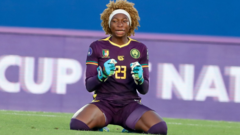

In the vibrant, high-stakes theater of African women’s football, legends are forged not merely through steady campaigns or tactical mastery, but through moments of sheer, unadulterated individual brilliance that permanently alter the sporting consciousness of a nation. Such a defining juncture arrived beneath the roaring floodlights of a breathless continental showdown, where Cameroonian goalkeeper Michaely Bihina etched her name into the bedrock of sports history. Defying the overwhelming odds of a tense penalty shootout against a formidable Moroccan side, Bihina delivered a masterclass in shot-stopping, single-handedly turning the tide to propel the Indomitable Lionesses into the grand final of the 2026 Women's Africa Cup of Nations (Wafcon). As the echoes of her heroic saves reverberate across the continent, the national discourse in Cameroon has shifted rapidly from mere athletic celebration to demands for permanent civic commemoration, with fervent supporters calling for a statue to be erected in her honor. This comprehensive report delves into the anatomy of that unforgettable night, explores the sprawling historical trajectory of Cameroonian goalkeeping, analyzes the profound socio-economic and political implications of this victory for women's sports in Central Africa, and examines the global reverberations of Bihina's meteoric rise to sporting immortality.
The path to a continental final is rarely linear, and for Cameroon, the 2026 Wafcon campaign has been an exercise in resilience, tactical adaptation, and psychological fortitude. Entering the tournament amidst soaring expectations and intense scrutiny, the Indomitable Lionesses faced a grueling schedule that tested every facet of their athletic conditioning. Yet, as the tournament progressed through the group stages and into the nerve-wracking knockout rounds, it became increasingly clear that Cameroon possessed a secret weapon in the form of their unassuming yet fiercely focused number one. Michaely Bihina's journey to this pinnacle of African football has been characterized by quiet determination, tireless training ground repetitions, and an innate ability to read the psychology of opposing strikers. When the semifinal fixture against Morocco concluded its regulation and extra-time minutes in a tense, scoreless stalemate, the stage was set for the ultimate test of nerve: the penalty shootout. It was within this crucible of immense pressure that Bihina transformed from a talented national team regular into a towering icon of the sport, executing four consecutive, breathtaking penalty saves that left players, coaches, and millions of spectators across the globe utterly spellbound.
The Anatomy of a Masterclass: Breaking Down the Semifinal Drama
To truly appreciate the magnitude of Michaely Bihina's performance against Morocco, one must analyze the technical precision and psychological dominance required to stop four penalties in a single shootout. Penalty shootouts are frequently reduced in popular media to a mere lottery—a roll of the dice where luck dictates the victor. However, elite sports scientists and tactical analysts know that shootouts are a complex chess match of probabilities, body language analysis, and split-second neuromuscular reactions. As the referee blew the whistle to signal the end of extra time, the stadium atmosphere shifted palpably. The Moroccan side, backed by vocal supporters and possessing immense technical flair, entered the shootout with high confidence. Conversely, the Cameroonian squad rallied around their goalkeeper, whose outward calm provided a stabilizing anchor for outfield players who had exhausted their physical reserves over one hundred and twenty minutes of relentless football.
Bihina's approach to the shootout was a masterclass in psychological warfare and biomechanical execution. Rather than guessing blindly or diving prematurely, she maintained an upright, balanced posture, utilizing micro-adjustments in her footwork to narrow the angles while maintaining eye contact with each opposing taker. This subtle dominance began to fray the nerves of the Moroccan penalty takers. The first save set the tone: a powerful, driven low shot toward the bottom left corner that was met by a full-stretch, fingertip-assisted deflection wide of the post. Instead of celebrating wildly, Bihina immediately reset her focus, projecting an aura of absolute impenetrability. As the sequence progressed, she correctly anticipated the trajectory of the second, third, and fourth spot-kicks, reading the subtle hip movements and plant-foot orientations of the players with uncanny precision. Each save was executed with clean catching or decisive parrying away from incoming rebounders, demonstrating not just athleticism, but elite situational awareness. By the time she blocked the fourth attempt, securing the victory and sending the Cameroonian bench spilling onto the turf in ecstatic celebration, Bihina had not only won a match; she had authored one of the most remarkable individual defensive displays in the history of international tournament football.
The immediate aftermath of the match was scenes of unbridled euphoria. In Yaoundé, Douala, and across the far corners of Cameroon, streets that had grown quiet during the tense hours of extra time erupted into a symphony of car horns, vuvuzelas, and joyous chants. Social media platforms were instantly flooded with video clips of the saves, accompanied by hyperbolic and heartfelt tributes from fans, analysts, and fellow athletes alike. Within hours of the final whistle, the hashtag #StatueForBihina began trending nationally, evolving rapidly from a whimsical internet meme into a serious grassroots movement. Supporters argued that her extraordinary feat transcended the boundaries of sport, serving as a powerful symbol of national pride, female excellence, and unyielding perseverance. While municipal authorities have yet to formally comment on the feasibility of erecting a monument, the sheer volume of public sentiment underscores the profound cultural impact of her performance. For a nation that cherishes its rich footballing heritage—having produced legendary male icons over the decades—seeing a female goalkeeper claim the absolute center stage of national adoration marks a historic cultural paradigm shift.
Historical Context: The Evolution of Cameroonian Goalkeeping Excellence
To understand the weight of Michaely Bihina's achievement, it is essential to contextualize the historical lineage of Cameroonian football. Historically, Cameroon has punched well above its weight on the global footballing map, earning the moniker the Indomitable Lions due to a fierce, combative style of play and an uncanny knack for producing world-class talent. From the pioneering heroics of the 1982 World Cup squad to the golden generation of the 1990s led by players like Roger Milla, and the subsequent African Cup of Nations triumphs, Cameroonian football has always been defined by strong characters and charismatic leaders. However, the narrative has overwhelmingly centered on flamboyant attackers, rugged defenders, and industrious midfielders. Goalkeeping, particularly within the women's national program, has occasionally struggled for the same level of institutional investment and public recognition, making Bihina's ascent all the more remarkable.
Over the past decade, the landscape of African women’s football has undergone a seismic transformation. The establishment of more structured domestic leagues, increased financial backing from the Confederation of African Football (CAF), and greater global exposure through international friendlies and scouting networks have elevated the technical and tactical standards across the continent. In this hyper-competitive environment, the role of the goalkeeper has evolved dramatically. No longer viewed merely as a player tasked with stopping shots, the modern goalkeeper in the women's game is the first attacker, an organizational maestro who commands the defensive line, dictates the tempo of play, and initiates quick counter-attacks. Bihina embodies this modern archetype. Her journey through the youth ranks and domestic competitions reflects the slow, deliberate building of infrastructure necessary to support elite athletic talent in Central Africa. By studying international trends while retaining the instinctive, fearless reflexes characteristic of Cameroonian football culture, she has positioned herself at the vanguard of a new generation of African shot-stoppers who are demanding global respect.
Furthermore, the historical significance of a goalkeeper becoming the definitive national hero of a major tournament cannot be overstated. Goalkeeping is famously a lonely, unforgiving trade. A striker can miss half a dozen chances and still be forgiven if they score the winner; a defender can make tactical errors masked by teammates; but a goalkeeper's mistakes are almost invariably fatal to the team's prospects. Operating under this constant sword of Damocles requires a unique psychological constitution. Bihina’s ability to remain cool under the intense blowtorch of a penalty shootout speaks volumes about her mental resilience. Her success serves as a powerful historical pivot point, ensuring that future generations of young girls in Cameroon and across Africa will not only dream of scoring winning goals in tournament finals, but will also proudly pull on the gloves, knowing that a goalkeeper can be the most celebrated hero in the entire nation.
Socio-Economic and Political Implications for Women's Sports in Central Africa
The reverberations of a major sporting triumph extend far beyond the white lines of the football pitch, deeply intersecting with the socio-economic and political fabric of the region. In Central Africa, where women's sports have historically battled against systemic underfunding, patriarchal cultural norms, and a scarcity of professional development pathways, the success of the Indomitable Lionesses serves as a powerful catalyst for institutional change. When a team reaches the final of a premier continental competition like Wafcon, it captures the undivided attention of government officials, corporate sponsors, and international media outlets. This spotlight provides a rare, golden opportunity to advocate for increased investment in grassroots infrastructure, fairer wage structures, and comprehensive healthcare and training facilities for female athletes.
Economically, the commercial viability of women's football in Cameroon stands on the precipice of a transformative boom. Historically, corporate sponsorship in the region has flowed disproportionately toward men's competitions, leaving women's clubs to operate on shoe-string budgets and amateur foundations. However, the viral popularity of Michaely Bihina's penalty heroics has demonstrated the immense marketable value of women's sports. Brands are beginning to realize that emotional resonance, national pride, and athletic excellence are gender-neutral commodities that can drive consumer engagement and brand loyalty. As commercial entities rush to associate themselves with the surging popularity of the Indomitable Lionesses, the influx of private capital has the potential to professionalize the domestic women's league, allowing players to earn sustainable livelihoods from their athletic pursuits and reducing the brain-drain that often sees top talent flee to European leagues prematurely.
On a sociopolitical level, athletic role models like Bihina play an indispensable role in shifting cultural perceptions regarding gender roles and female capabilities. In many traditional communities throughout the region, the pursuit of a demanding athletic career by young women is viewed with skepticism or outright discouragement, weighed down by outdated expectations surrounding domestic responsibilities and traditional employment. When a young woman stands resolute before millions of television viewers, out-thinking and out-performing her peers on an international stage, she shatters these glass ceilings with absolute finality. The image of Bihina commanding her penalty box challenges deep-seated patriarchal notions of authority and strength. For young girls watching from the neighborhoods of Douala, the rural provinces, or schoolyards across the nation, she is living proof that excellence, composure under pressure, and ultimate authority are traits accessible to women. This cultural empowerment is arguably an even greater legacy than any trophy, laying the groundwork for a more inclusive and equitable society.
Expert Analysis: Tactical Adaptations and the Modern African Goalkeeper
From a purely technical standpoint, football experts and tactical analysts across the globe have spent the days following the semifinal dissecting the mechanics of Bihina’s performance. Modern goalkeeping coaching has shifted heavily toward data analytics, video scouting, and biomechanical optimization. Goalkeepers no longer rely solely on natural instincts; they enter penalty shootouts equipped with detailed dossiers on the preferred execution styles, run-up angles, and psychological tendencies of opposing penalty takers. Yet, possessing data and successfully executing under pressure are two entirely different realms of athletic performance.
According to leading coaching consultants who specialize in African football development, Bihina’s success against Morocco was a textbook demonstration of reactive agility combined with superior spatial awareness. Many goalkeepers suffer from premature commitment—diving before the ball is struck because they fear being beaten for pace. Bihina, however, exhibited remarkable patience, keeping her weight evenly distributed on the balls of her feet until the final microsecond of the striker's foot contact. This discipline allowed her to cover maximum lateral distance even against well-placed shots. Furthermore, her ability to absorb the velocity of the ball rather than simply deflecting it back into dangerous areas showcased superior hand-eye coordination and core strength. Coaches across the continent are already utilizing footage of her four saves as instructional material for academy-level goalkeepers, highlighting the importance of composure, body shape, and mental clarity during high-stress scenarios.
This tactical evolution reflects a broader trend within the African game: the rapid closing of the technical gap between African nations and the traditional powerhouses of European and South American football. Historically, African teams have been lauded for their raw athleticism, physical endurance, and flair, while often facing unfair structural critiques regarding tactical discipline or organizational structures. Performances like the one delivered by Cameroon's defense and anchored by Bihina completely dismantle these tired tropes. The Indomitable Lionesses displayed immense tactical discipline, maintaining a rigid defensive block for over two hours against a technically gifted Moroccan side, before executing under the most rigorous psychological test known to the sport. As the continent continues to develop world-class coaching licenses, state-of-the-art training facilities, and sophisticated scouting networks, the standard of play in tournaments like Wafcon will only continue to scale new heights, drawing admiring glances from football federations across the globe.
Global Perspectives and the International Transfer Market
The ripples of a stellar performance in a major continental tournament rarely stay contained within regional borders. In the modern interconnected football ecosystem, tournaments like Wafcon serve as premier scouting showcases for international talent spotters, agents, and sporting directors from top-tier clubs across Europe, North America, and Asia. Goalkeepers, in particular, are subject to intense global scrutiny, as elite clubs constantly scour the globe for reliable, shot-stopping anchors who possess the technical capacity to play out from the back and handle the immense physical demands of top-flight competition.
In the wake of her penalty heroics against Morocco, Michaely Bihina’s name has unsurprisingly ascended to the top of scouting shortlists for numerous international clubs. European scouts, well aware of the value of a clutch goalkeeper who can single-handedly win matches in high-pressure knockout fixtures, have intensified their monitoring of her contractual situation and performances. Moving to a competitive international league represents a logical next step for elite African talent seeking to test their abilities against the world's best week in and week out. The exposure gained from playing in top-tier European leagues or emerging North American franchises not only accelerates a player's technical development but also elevates the overall competitiveness of the national team, as players return to international duty seasoned by the rigors of foreign professional environments.
Moreover, the global media attention garnered by such dramatic matches elevates the profile of African women's football as an entertaining, highly competitive, and commercially viable product on the international stage. For years, international broadcast coverage of women's football in Africa struggled for prime-time visibility, often relegated to niche streaming platforms or delayed highlight packages. However, viral moments of athletic brilliance—such as four consecutive penalty saves in a semifinal shootout—shattering algorithmic boundaries on social media platforms ensure that millions of viewers worldwide are introduced to the raw drama and high quality of Wafcon. This global visibility is invaluable for attracting international partnerships, securing lucrative broadcasting rights, and inspiring a new generation of fans outside the continent who are eager to witness the passion and skill of African football.
Looking Ahead: The Final Frontier and Long-Term Legacy
As the dust settles on the dramatic semifinal victory and the focus of the entire nation pivots toward the impending Wafcon final, the atmosphere surrounding the Cameroonian camp is one of focused determination rather than complacency. Reaching the final is an extraordinary achievement, but for a squad forged in the fires of competitive resilience, the ultimate prize remains the continental crown. The coaching staff faces the delicate task of channeling the emotional euphoria of the semifinal heroics into positive, controlled energy for the final fixture, ensuring that the players remain grounded, tactically disciplined, and physically recovered after a draining one-hundred-and-twenty-minute battle.
For Michaely Bihina personally, the challenge will be managing the sudden onslaught of media attention, public adulation, and elevated expectations. Cultivating psychological detachment from the external noise is a hallmark of elite athletes, and her calm demeanor suggests she possesses the internal equilibrium necessary to handle her newfound status as a national icon. Whether municipal leaders ultimately move forward with the passionate fan demands to erect a statue in her honor remains to be seen; however, the symbolic monument of her achievement has already been permanently etched into the collective memory of African sports history. She has transformed from a talented athlete into a cultural touchstone—a living testament to what can be achieved through unwavering focus, technical mastery, and nerves of absolute steel.
Ultimately, the story of Michaely Bihina at the 2026 Women's Africa Cup of Nations is much more than a tale of four saved penalties or a secured ticket to a final match. It is a narrative about the relentless progression of women's sports in Africa, the historical evolution of tactical excellence, the profound socio-economic power of athletic representation, and the enduring human capacity to achieve greatness when faced with insurmountable pressure. As the Indomitable Lionesses step onto the pitch for the ultimate showdown, carrying the hopes, dreams, and roaring cheers of millions of supporters on their shoulders, one thing is abundantly clear: regardless of the final whistle's blow, the legacy of their heroic goalkeeper has already secured a permanent, luminous chapter in the glorious annals of global football history.