
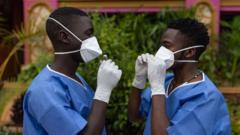

KAMPALA — In a triumph of public health infrastructure, epidemiological coordination, and community engagement, the Republic of Uganda has officially transitioned into a state of post-outbreak vigilance, successfully discharging its final confirmed Ebola patient from institutional care. This milestone marks the definitive closure of yet another acute chapter in the East African nation's ongoing historical struggle against viral hemorrhagic fevers. While neighboring regions within the Democratic Republic of Congo continue to grapple with persistent transmission chains and the debilitating socio-economic fallout of recurring outbreaks, Uganda’s strategic containment underscores a remarkable maturation of its domestic health apparatus. Through decades of institutional hardening, iterative learning from past public health crises, and the seamless integration of localized community mobilization with advanced scientific diagnostics, the Ugandan model has emerged as a globally recognized case study in outbreak resilience.
The Anatomy of a Crisis Averted: Historical Context and Institutional Evolution
To fully appreciate the gravity of Uganda's recent containment success, one must examine the historical continuum of viral hemorrhagic fever incursions in the East and Central African region. Uganda is situated within a high-risk ecological corridor for Zoonotic pathogen spillover. The country's dense tropical rainforests, extensive cave systems populated by bat reservoirs, and high levels of cross-border human mobility create an environment where filoviruses—such as Ebola and Marburg—find fertile ground for emergence. Historically, the nation was caught unprepared by initial incursions, suffering devastating losses during early outbreaks like the catastrophic Gulu epidemic of 2000 through 2001, which claimed hundreds of lives and exposed profound vulnerabilities in infection prevention and control.
However, the trauma of past epidemics catalyzed a profound structural evolution within Uganda's Ministry of Health. Rather than treating each outbreak as an isolated, unprecedented emergency, successive administrations recognized that endemic biosecurity threats required permanent, institutionalized infrastructure. Over the past two decades, Uganda systematically constructed what public health experts now regard as one of the most robust epidemiological early-warning and response systems on the African continent. This transformation was characterized by the establishment of the Uganda Virus Research Institute as a premier diagnostic powerhouse, the creation of decentralized rapid response teams at the district level, and the institutionalization of continuous training regimens for frontline healthcare workers.
Furthermore, the legal and regulatory frameworks governing public health emergencies were overhauled. The government gained the administrative agility to rapidly mobilize emergency funds, bypass bureaucratic procurement bottlenecks during crises, and implement evidence-based containment measures without facing debilitating political paralysis. This historical foundation ensured that when the most recent threat materialized, the state apparatus did not have to improvise its response; it merely had to execute a pre-tested, highly refined operational playbook.
Scientific Vigilance and the Operational Playbook
The mechanics of Uganda’s recent containment success rest on several interdependent pillars of modern epidemiology: aggressive contact tracing, molecular diagnostic efficiency, rigorous isolation protocols, and the deployment of experimental therapeutics and vaccination strategies where applicable. When the index cases were identified during this latest threat cycle, the Ministry of Health, in close collaboration with international scientific bodies, immediately deployed multidisciplinary teams to the affected epicenters.
Central to this operation was the rapid deployment of mobile laboratories capable of delivering Polymerase Chain Reaction test results within hours rather than days. In the theater of viral hemorrhagic fevers, time is the single most critical variable. Delays in confirmation allow the virus to outpace containment efforts, seeding new chains of transmission in urban centers or rural marketplaces. By drastically shortening the diagnostic turnaround time, Ugandan epidemiologists were able to map transmission networks with surgical precision, identifying secondary and tertiary contacts before they developed symptoms or sought care in general healthcare settings, where nosocomial spread is most prevalent.
Simultaneously, treatment units were constructed with a focus on both clinical efficacy and biosafety. Lessons learned from the West African Ebola epidemic of 2014 through 2016 informed the architectural and operational design of these facilities. Modern treatment centers prioritized patient comfort alongside strict barrier nursing, recognizing that high-quality supportive care—including aggressive intravenous rehydration, electrolyte balancing, and management of secondary infections—drastically improves survival rates. By demystifying the treatment centers and demonstrating that admission did not equate to a death sentence, public health officials successfully countered the deep-seated community fear that historically drove patients into hiding.
The Human Element: Community Trust and Social Mobilization
No matter how sophisticated laboratory diagnostics or clinical protocols may be, epidemiological containment ultimately succeeds or fails at the community level. The most significant vulnerability during any epidemic is not the virus itself, but human behavior driven by fear, misinformation, and cultural traditions. In many rural African communities, traditional burial rites—which involve the washing, touching, and dressing of bodies—are deeply sacred obligations. Historically, attempting to ban these practices without cultural sensitivity or community dialogue resulted in massive resistance, clandestine burials, and accelerated community transmission.
Uganda’s recent success was predicated on a paradigm shift toward radical community engagement. Rather than imposing top-down military-style lockdowns or heavy-handed police enforcement, public health authorities invested heavily in grassroots communication networks. Village health teams, local religious leaders, traditional healers, and survivors of past outbreaks were recruited as frontline ambassadors of scientific truth. These trusted local figures were empowered to explain the nature of the disease in local dialects, address dangerous myths, and collaborate with families to adapt traditional burial practices into safe, dignified ceremonies that still respected cultural imperatives.
This localized approach fostered a profound sense of shared responsibility. Communities transformed from suspicious subjects of state intervention into active guardians of public health. Neighbors reported suspicious symptoms or travel histories among themselves not out of fear of punishment, but out of a collective understanding that early reporting saves lives. This social cohesion stands in stark contrast to the dynamics observed in other conflict-affected zones where state authority is viewed with deep distrust.
Regional Contrasts: The Persistent Challenge in the Democratic Republic of Congo
The stark contrast between Uganda’s triumphant containment and the ongoing struggles in the eastern provinces of the Democratic Republic of Congo illuminates the profound geopolitical and security dimensions of infectious disease management. While viruses recognize no international borders, the human systems designed to combat them are heavily constrained by political geography, institutional stability, and regional security frameworks.
The eastern regions of the Democratic Republic of Congo have been plagued by decades of protracted armed conflict, displacement, and the proliferation of non-state militia groups. In such volatile environments, public health infrastructure is perpetually undermined. Clinics are frequently looted or destroyed, vaccination campaigns are disrupted by active combat, and healthcare workers face severe physical threats, including targeted violence against medical missions. Under these harrowing conditions, maintaining continuous contact tracing or establishing secure treatment perimeters becomes an almost insurmountable logistical challenge.
Furthermore, population mobility in the Great Lakes region is exceptionally high. Porous borders, driven by economic necessity, trade, and refugee movements, mean that a localized outbreak in North Kivu or Ituri is perpetually threatening to spill over into Uganda and other neighboring states. The disparity in outcomes between Uganda and its western neighbor does not reflect a lack of competence among Congolese health professionals—who operate under unimaginably difficult circumstances—but rather highlights the harsh reality that epidemiological success is inextricably linked to state capacity, civil stability, and sustained infrastructural investment.
Economic and Geopolitical Implications of Effective Biosecurity
The successful containment of an Ebola outbreak carries massive economic dividends that extend far beyond the immediate preservation of human life. In a globalized economy, perception often dictates capital flows, tourism revenues, and international trade stability. Uncontrolled epidemics trigger immediate travel advisories, flight suspensions, and border closures, which can devastate a developing nation's economy within weeks.
By swiftly and transparently managing the recent threat without resorting to catastrophic, economy-wide shutdowns, Uganda has reinforced its status as a stable, reliable hub for regional commerce and international investment. Global financial markets and institutional investors closely monitor a country's ability to manage systemic shocks. Uganda’s demonstrated resilience signals to the international community that its governance structures possess the maturity and competence to insulate the broader economy from biological crises.
Moreover, this success enhances Uganda's soft power and diplomatic standing within the African Union and global health governance forums. Kampala is increasingly positioned as a regional leader in biosecurity, capable of sharing technical expertise, training regional cadres, and coordinating cross-border surveillance initiatives. As the world continues to grapple with the post-pandemic reality of emerging infectious threats, nations that demonstrate domestic self-reliance and operational competence gain considerable leverage in international negotiations regarding health security funding and vaccine equity.
Expert Perspectives: Lessons for Global Health Security
International epidemiologists, virologists, and global health strategists have analyzed Uganda’s recent containment operation to distill universal lessons for pandemic preparedness. A recurring theme in expert evaluations is the critical importance of decentralized authority coupled with centralized technical support. In many Western nations, bureaucratic inertia and political polarization severely hampered public health responses during recent global health crises. Conversely, Uganda’s model demonstrated the efficacy of empowering district-level health officers to make immediate tactical decisions based on local ground realities, backed by the scientific firepower of national and international laboratories.
Public health economists also emphasize the cost-effectiveness of proactive investment in baseline health systems compared to reactive emergency spending. Every dollar spent on training community health workers, maintaining cold-chain storage, and upgrading regional diagnostic laboratories yields exponential savings by aborting outbreaks before they achieve exponential growth. Experts argue that international donor agencies and multilateral financial institutions must shift their funding paradigms away from emergency appeals launched only after a crisis has exploded, and toward sustained, long-term capacity building in high-risk ecological zones.
Another vital insight emerging from the Ugandan experience is the integration of traditional medicine networks into modern surveillance frameworks. Rather than alienating traditional healers—who are often the first point of contact for rural patients—Ugandan health authorities engaged them as partners in symptom recognition and early referral. This pragmatic approach bridges the gap between formal allopathic medicine and traditional cultural frameworks, ensuring that fewer cases slip through the cracks of the official reporting system.
Looking Ahead: Permanent Vigilance and Future Vulnerabilities
Despite the celebratory atmosphere surrounding the discharge of the final patient, Ugandan health officials and international experts are acutely aware that complacency is the ultimate enemy of biosecurity. The ecological drivers of filovirus emergence—including climate change, agricultural encroachment into pristine wilderness areas, deforestation, and expanding human populations—are intensifying globally. Spillover events are not historical anomalies; they are recurring features of the human-animal interface in the twenty-first century.
Consequently, Uganda’s transition to post-outbreak status does not mean a relaxation of standards, but rather a strategic pivot toward heightened surveillance, border screening maintenance, and continuous refresher training for medical personnel. The country’s rapid-response infrastructure remains on permanent standby, ready to deploy at a moment's notice should another suspected cluster emerge. Furthermore, ongoing research into next-generation pan-filovirus vaccines and broad-spectrum antivirals offers hope that future outbreaks may be met with even more potent medical countermeasures.
The global community must view Uganda’s achievement not merely as a localized victory, but as a proof-of-concept for localized resilience in the face of systemic biological threats. As the nation closes this particular chapter, it leaves behind a legacy of methodological rigor, community-centric engagement, and institutional grit. For the wider international community, the Ugandan success story serves as both an inspiration and a blueprint: demonstrating that with the right combination of political will, scientific excellence, and deep respect for community dynamics, even the most terrifying pathogens can be met, managed, and ultimately defeated.