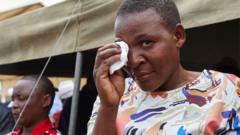


FREETOWN — As August unfolds its heavy rains across West and Central Africa, a sprawling landscape of interconnected crises—ranging from unprecedented spikes in regional conflict and rising civilian casualties to a complex web of public health emergencies including mpox, cholera, and Ebola—commands the urgent attention of regional governments, international partners, and humanitarian observers. The period spanning mid-August 2026 has brought into stark relief the profound vulnerabilities testing the resilience of communities from the shores of Guinea-Bissau to the dense rainforests of the Congo Basin.
For Sierra Leone and its immediate neighbors within the Mano River Union and the broader Economic Community of West African States (ECOWAS) bloc, these developments are not distant concerns. They represent shared regional vulnerabilities that threaten cross-border stability, economic integration, and human security. From the alarming lethality of contemporary armed conflicts involving advanced technological warfare to the relentless spread of infectious diseases across porous borders, the current geopolitical and humanitarian matrix demands a comprehensive, deeply analyzed evaluation of systemic risks and multi-lateral responses.
The Escalating Humanitarian Crisis and the Perils of Modern Warfare
The backdrop of mid-August 2026 is dominated by a grim milestone in regional violence. Assessments released to coincide with World Humanitarian Day paint a terrifying picture of the human cost of insecurity across West and Central Africa. Data compiled through the end of July indicates that 15,352 people lost their lives due to armed conflict and general insecurity. This staggering figure nearly equals the 16,419 conflict-related fatalities recorded during the entirety of the previous year, 2025, signaling an exponential acceleration in the lethality of ongoing regional flashpoints.
This surge in mortality is intrinsically linked to the changing nature of warfare within the region. No longer confined to traditional small-arms skirmishes or localized rebellions, modern conflicts in parts of the Sahel, the Lake Chad basin, and Central Africa increasingly incorporate asymmetric tactics and advanced technologies. Of particular concern to protection monitors is the growing proliferation and deployment of armed drones and other unmanned aerial systems. These technologies have fundamentally altered the tactical landscape, increasing the radius of destruction and making civilian populations acutely vulnerable to indiscriminate or targeted strikes far from traditional frontlines.
Humanitarian personnel operating within these volatile zones face unprecedented hazards. Relief workers, who serve as the ultimate lifeline for millions displaced by violence or trapped in besieged areas, are increasingly caught in the crosshairs. Official figures from the third quarter of 2026 record that five humanitarian workers have been killed, nine injured, and fourteen abducted since January. Notably, national staff members—local citizens working tirelessly within their own communities—account for the vast majority of these casualties. This dynamic not only inflicts localized tragedies upon families and organizations but also severely erodes institutional memory and operational capacity on the ground.
The systematic shrinking of humanitarian access compounds these physical dangers. Armed actors across multiple theaters frequently utilize administrative impediments, active hostilities, and the destruction of critical infrastructure to block the delivery of life-saving provisions. This weaponization of aid creates cascading crises of malnutrition, preventable disease outbreaks, and chronic displacement. In response, international humanitarian agencies have issued desperate pleas for renewed adherence to international humanitarian law, demanding that all parties to ongoing conflicts guarantee safe, rapid, and unimpeded access for relief personnel and ensure the absolute protection of non-combatants.
Guinea-Bissau Faces Inaugural Mpox Outbreak Amid Structural Fragilities
Shifting from geopolitical conflict to public health security, the nation of Guinea-Bissau is currently navigating a historic medical challenge: its first-recorded outbreak of mpox. According to validated health assessments, seven confirmed cases had been registered by mid-August, with adults forming the entirety of the confirmed cohort—six residing in the capital city of Bissau and one in the surrounding Biombo region. Crucially, no fatalities have been documented in connection with these initial index cases, offering a small measure of reassurance to national health authorities.
However, a deeper epidemiological analysis reveals severe underlying risks, particularly regarding pediatric populations. Among the 46 suspected cases currently under investigation, an alarming 23 involve children under the age of 15, with 16 of those being toddlers under five years old. Medical experts emphasize that infants and young children face a disproportionately higher risk of developing severe clinical complications, prolonged systemic illness, and secondary bacterial infections when contracting the virus.
The structural fragility of Guinea-Bissau’s national disease surveillance and healthcare infrastructure complicates containment strategies. Specialized health agencies have expressed grave concern that under-resourced diagnostic capabilities and limited rural outreach could easily allow numerous cases to circulate undetected within remote communities. The timing of the outbreak introduces an additional layer of urgency. With the nationwide reopening of schools scheduled for September, public health planners warn that congregate settings among children could accelerate community transmission vectors if robust screening, hygiene protocols, and rapid isolation measures are not immediately implemented.
The Guinea-Bissau mpox situation serves as a stark reminder of West Africa's persistent post-pandemic vulnerabilities. Even as global attention wanders from emerging pathogens, local health systems continue to grapple with systemic deficits in laboratory reagents, cold-chain storage for vaccines, and trained personnel capable of swift contact tracing. Regional observers note that preventing a widespread domestic epidemic requires not only immediate international medical aid but also sustained, long-term investments in primary healthcare delivery networks across the nation.
The Regional Cholera Burden and Targeted European Emergency Funding
While mpox threatens Lusophone West Africa, the perennial scourge of cholera continues to devastate populations across a vast swathe of West and Central Africa. According to global health tracking data published by the World Health Organization, more than 61,000 cholera cases were formally reported across the broader African continent during just the first five months of 2026. This staggering total underscores how waterborne diseases continue to thrive amid crumbling infrastructure, urban crowding, and climate-induced disruptions to safe water access.
In direct response to this escalating burden, the European Commission announced a targeted emergency humanitarian funding allocation of €2.3 million designed to bolster cholera containment and management efforts in four acutely affected nations: Nigeria, the Central African Republic, Chad, and Cameroon. This financial injection is strategically partitioned to address the specific scale of transmission within each recipient state, reflecting a granular approach to regional public health intervention.
Nigeria, bearing the heaviest absolute burden among the recipients, has been allocated €1.5 million to scale up emergency case management, rehabilitate water supply points, and conduct widespread community hygiene campaigns. The Central African Republic receives €500,000 to navigate the dual challenges of endemic waterborne disease and pervasive civil insecurity. Chad and Cameroon receive €200,000 and €100,000 respectively, targeted primarily toward localized disease surveillance, community engagement initiatives, and the distribution of water purification supplies.
Public health economists and water-sanitation specialists argue that while these emergency disbursements are vital for capping immediate fatality rates, they represent mere stopgap measures against a structural crisis. True mitigation requires massive capital investments in municipal water treatment facilities, climate-resilient sanitation infrastructure, and robust public health education campaigns that can permanently break the fecal-oral transmission cycle in high-risk riparian and urban informal settlements.
Ebola Resurgence in the Democratic Republic of the Congo: Scale and Strategy
Further south and east, the Democratic Republic of the Congo (DRC) continues its arduous battle against an expanding Ebola virus disease outbreak. National health authorities reported that confirmed cases had surpassed 5,200, with cumulative fatalities nearing the grim threshold of 2,500 deaths by mid-August. This trajectory confirms that the current epidemic is one of the most challenging health crises the region has faced in recent years, testing the limits of local clinical capacities and community trust.
In response to the expanding geographic footprint of the virus, the Congolese government, working in close coordination with international partners, has significantly scaled up its containment strategy. The multi-layered operational response prioritizes expanding safe clinical care capacity, conducting rigorous community engagement to counter misinformation, ensuring safe and dignified burial practices, and reinforcing active disease surveillance systems across all affected health zones.
A critical innovation in the current response is a specialized initiative backed by the United Nations aimed at securing the immense transit corridors of the Congo River. Recognizing that major waterways serve as vital arteries for trade and population movement—and consequently as vectors for viral dissemination—authorities are establishing rigorous surveillance and preparedness protocols along more than 1,700 kilometers of the river. This includes enhanced screening infrastructure at priority ports, docking stations, and informal transit points to intercept symptomatic travelers before they seed new chains of transmission in distant urban centers.
Complementing these logistical controls is a major biomedical deployment. The World Health Organization has successfully allocated 70,000 doses of the Ebola Zaire vaccine. These doses are being deployed immediately to protect frontline healthcare workers—who remain the most exposed and vital tier of the defense matrix—and to support an innovative clinical trial designed to assess the vaccine's potential cross-efficacy against the Bundibugyo virus strain. This scientific endeavor offers hope not only for the current containment effort but for future preparedness frameworks across the entire Central African bioclimatic zone.
Socioeconomic and Geopolitical Implications for West Africa
Analyzing these concurrent emergencies through a macroeconomic and geopolitical lens reveals profound implications for the stability and integration of West and Central Africa. The intersection of escalating armed conflict and multiple public health epidemics creates a toxic feedback loop that drains national treasuries, disrupts agricultural production, and paralyses intra-regional commerce.
When agricultural heartlands are destabilized by violence—as seen in parts of the Sahel and the Lake Chad basin—local food systems collapse, driving millions toward acute food insecurity and malnutrition. Malnutrition, in turn, severely compromises human immune systems, rendering populations vastly more susceptible to infectious diseases such as cholera, mpox, and Ebola. This vicious cycle places an unbearable burden on fragile state budgets, forcing governments to divert scarce public funds away from long-term development initiatives, education, and infrastructure investment toward emergency security operations and disease containment.
Furthermore, health crises of this magnitude carry severe economic penalties through the disruption of trade and travel. Border closures, quarantine measures, and the general fear of contagion stifle cross-border commerce, disproportionately harming informal traders, smallholder farmers, and micro-entrepreneurs who form the backbone of West Africa’s economy. For nations striving to deepen economic integration under regional frameworks, these recurring disruptions underscore the urgent necessity of establishing permanent, regionally coordinated health security and crisis-response architectures.
From a governance perspective, the inability of central authorities to guarantee physical security or provide basic public health infrastructure in peripheral regions frequently erodes public trust in democratic institutions. This governance deficit creates fertile ground for extremist recruitment, localized vigilantism, and civil unrest, threatening the broader geopolitical architecture of coastal and interior states alike.
The Imperative for Comprehensive Regional and Global Solidarity
As West and Central Africa navigate this complex convergence of conflict and contagion, the overarching takeaway from mid-August 2026 is that localized crises cannot be contained within national borders. Whether examining the transboundary movement of armed groups utilizing advanced drone technology, the aquatic transmission routes of cholera along major river basins, or the threat of undetected mpox vectors crossing school systems, the security and prosperity of the region are indivisible.
Experts across the humanitarian and diplomatic spectrum agree that addressing these multi-faceted challenges requires a paradigm shift. International donors, regional economic bodies, and national governments must move beyond reactive, short-term crisis management toward sustained, preventive investments. This entails strengthening national healthcare infrastructure, expanding decentralized disease surveillance to the most remote villages, enforcing international humanitarian law to protect civilian populations and relief personnel, and addressing the root socioeconomic drivers of armed conflict.
For Sierra Leone and its regional partners, maintaining vigilance, fostering cross-border intelligence and health data sharing, and upholding a steadfast commitment to humanitarian principles will be paramount. Only through collective resolve, robust regional cooperation, and unwavering international solidarity can West and Central Africa hope to break the recurring cycles of violence and disease that threaten to undermine the continent's immense potential for peace, development, and human flourishing.