
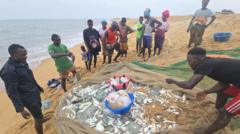

Along the sun-scorched, palm-fringed Atlantic coastline of Sierra Leone, a quiet crisis is unfolding every single day at dawn. Traditional artisanal fishermen, whose families have coaxed a living from the ocean for generations, push their wooden canoes into the surf with a mounting sense of dread. Their nets, once heavy with croaker, barracuda, and red snapper, are now frequently hauled back empty or negligible. The culprit, according to local maritime workers, community leaders, and economic analysts, lies just past the horizon: massive, industrial Chinese trawlers operating with impunity, allegedly depleting fish stocks that are critical for both local food security and the national economy.
This unfolding maritime conflict is not merely a localized dispute over catches; it is a complex intersection of international geopolitics, foreign direct investment, regulatory enforcement challenges, and the existential survival of West African coastal communities. As global demand for seafood surges, the waters off Sierra Leone have transformed into a frontline for resource competition, putting traditional livelihoods on a collision course with global commercial expansion.
The Historical Evolution of Sierra Leone's Artisanal Fishing Sector
To understand the gravity of the current situation, one must examine the deep historical roots of fishing in Sierra Leone. For centuries, the artisanal fisheries sector has served as the backbone of coastal economies. Villages such as Tombo, Goderich, and various communities scattered along the Freetown peninsula and southern coastline are entirely defined by the rhythm of the tides and the seasonal migrations of fish species. Fishing is not merely an occupation in these regions; it is a deeply embedded cultural heritage, a social safety net, and the primary source of animal protein for the domestic population.
Historically, the relationship between man and the sea in Sierra Leone was characterized by a sustainable balance. Artisanal fishers utilized dugout canoes, paddle power, and later, small outboard engines. Their gear—primarily gillnets, cast nets, and handlines—targeted mature fish while allowing juveniles to escape and replenish the population. The catches were landed on open beaches, processed by local women known as fish processors or mongers, and distributed to local markets across the country. This domestic value chain provided employment for tens of thousands of people, sustaining entire households and regional economies without the need for sophisticated financial institutions or heavy state subsidies.
However, as the post-independence era progressed, and particularly following the devastating civil conflict that ended in the early 2000s, the national government sought ways to rebuild the economy and generate foreign exchange. The vast marine wealth of Sierra Leone, sitting within its Exclusive Economic Zone (EEZ), presented an obvious opportunity. Lacking the domestic capital, modern fleet technology, and surveillance capabilities to exploit these offshore resources independently, the state began issuing industrial fishing licenses to foreign operators. What began as a strategic economic initiative to monetize marine assets has gradually evolved into an institutionalized struggle between large-scale industrial extraction and small-scale artisanal survival.
The Mechanics of the Crisis: Industrial Trawlers and Inshore Waters
In recent years, the presence of foreign-flagged, predominantly Chinese-owned or Chinese-operated industrial trawlers in Sierra Leonean waters has skyrocketed. While commercial fishing by foreign vessels is not inherently illegal—provided it is conducted under valid licenses and within the bounds of international and domestic maritime law—local fishers and maritime watchdogs allege that widespread infractions are the norm rather than the exception.
At the heart of the grievance is the violation of the Inshore Exclusion Zone (IEZ). Under Sierra Leonean fisheries regulations, a specific band of ocean stretching a designated number of nautical miles from the coast is legally reserved exclusively for artisanal and semi-artisanal fishers. This zone is designed to protect the breeding grounds of commercially vital species and to safeguard the livelihoods of traditional canoe operators who cannot compete with the sheer scale and technological prowess of industrial ships.
Artisanal fishers repeatedly report that giant Chinese trawlers routinely cross into these protected waters, often under the cover of darkness or during the early morning hours. Equipped with massive, heavy-weighted bottom-trawling nets, these vessels sweep the ocean floor, scooping up everything in their path. This indiscriminate fishing method captures not only marketable adult fish but also massive quantities of juvenile fish, crustaceans, and marine mammals that are subsequently discarded as bycatch—dead and dying—back into the ocean.
The economic and ecological consequences of this practice are catastrophic. By decimating juvenile fish populations before they have a chance to spawn, the industrial trawlers are essentially mortgaging the future of the sea. Local fishers describe a noticeable, sharp decline in catch volumes over the past decade. Where a canoe crew could once secure multiple baskets of fish in a single trip, they now frequently return with barely enough to cover the cost of their fuel and bait. This dramatic reduction in yield has pushed many fishing families into chronic debt and deepening poverty.
Economic Implications: Food Security and Domestic Markets
Beyond the immediate plight of individual fishers, the depletion of Sierra Leone’s marine resources carries profound implications for national food security and public health. Fish is the most accessible and affordable source of animal protein for the population of Sierra Leone, particularly for lower-income households who cannot afford beef, poultry, or imported meats.
As coastal stocks dwindle and local catches plummet, the price of fish in domestic markets has risen steeply. This inflation places a heavy nutritional burden on urban and rural families alike. Public health experts warn that chronic protein deficiency among children can lead to stunted growth, developmental delays, and weakened immune systems. Ironically, much of the fish extracted by the industrial trawlers—including high-value species and massive quantities of pelagic fish—is not destined for local consumption. Instead, it is frozen onboard, transshipped to refrigerated cargo vessels on the high seas, and exported directly to international markets, including Asia and Europe, or processed into fishmeal and fish oil to feed aquaculture and livestock industries abroad.
This dynamic represents a classic resource curse: a developing nation with immense natural wealth sees its assets extracted by foreign entities for external benefit, while the local population bears the environmental degradation and social fallout. The economic ripple effects extend deeply into the informal sector. Women who rely on smoking, drying, and trading fish find themselves out of stock and out of work, undermining female economic empowerment and rural household stability.
The Geopolitical and Diplomatic Dimension: The Role of Distant-Water Fishing Fleets
To fully comprehend the scale of the crisis in Sierra Leone, one must view it through a global geopolitical lens. China possesses the world's largest distant-water fishing fleet, numbering in the thousands of vessels operating across the globe, from Latin America to the Pacific and throughout African waters. This expansive fleet is heavily subsidized by the Chinese government, which provides financial support for fuel, shipbuilding, and the modernization of onboard technology.
These subsidies enable Chinese enterprises to operate in distant waters with profit margins that would be impossible under strictly commercial, unsubsidized conditions. For Beijing, securing marine protein is a matter of national food security for its massive domestic population. However, the operational footprint of these fleets in developing nations has frequently drawn sharp criticism from international environmental organizations, local governments, and coastal communities.
In Sierra Leone, diplomatic relations with China are strong, characterized by significant infrastructure investments, construction projects, and bilateral aid agreements. This multifaceted partnership creates a delicate diplomatic tightrope for the Sierra Leonean government. While officials are acutely aware of the domestic anger surrounding illegal fishing, they must also navigate relations with a powerful global superpower that is a key economic partner. Consequently, public policy responses often balance between diplomatic sensitivity and the urgent need to appease a restive, struggling domestic constituency.
Regulatory Challenges, Corruption, and Monitoring Deficits
Why do industrial trawlers continue to operate seemingly unchecked within restricted waters? The answer lies in the immense structural, institutional, and logistical challenges facing Sierra Leone’s maritime governance framework.
The Sierra Leonean Navy and the Ministry of Fisheries and Marine Resources are tasked with patrolling a vast maritime territory. However, they are severely constrained by a lack of adequate resources, patrol vessels, fuel budgets, and advanced radar or satellite tracking systems. While Vessel Monitoring Systems (VMS) are legally required for licensed industrial ships, operators have been known to tamper with, switch off, or disable their transponders to mask their locations when engaging in unauthorized fishing within the IEZ.
Furthermore, transparency and accountability within the licensing process have historically been subjects of intense debate. Civil society organizations and maritime watchdogs have frequently called for greater openness regarding who ultimately owns and operates the vessels flying various flags of convenience. Complex corporate ownership structures, shell companies, and local proxies can make it exceptionally difficult to trace liability when illegal, unreported, and unregulated (IUU) fishing activities are detected.
Compounding these logistical hurdles is the perennial risk of corruption. The vast financial stakes involved in industrial fishing create fertile ground for illicit practices at various levels of the administrative chain. Bribes can facilitate the overlooking of undersized mesh nets, undeclared catches, or unauthorized incursions into artisanal zones. Without robust, independent oversight and stringent anti-corruption measures, regulatory frameworks remain toothless on paper, unable to translate policy into effective enforcement on the water.
Voices from the Ground: Testimonials of Despair and Resilience
Statistics and policy reports, while essential, can sometimes obscure the deeply human element of the crisis. Along the coastline, the narrative is articulated through the raw, unfiltered voices of those whose lives have been upended.
Alhaji Turay, an experienced artisanal fisherman from a coastal village near Freetown, expresses a sentiment shared by many of his peers: "We are watching our livelihood die right in front of our eyes. Our grandfathers fished here, our fathers fished here, and we taught our sons to fish here. But there is nothing left for the next generation. When we go out at night, we see the bright lights of the big Chinese ships glowing on the horizon. They come close to the shore, where the fish come to breed. They take everything, leaving us with empty nets and broken dreams. If nothing changes soon, we will have to abandon the sea and turn to crime or migrate inland just to survive."
Similarly, Mariama Sesay, a veteran fish processor and trader, speaks of the economic devastation rippling through the markets: "Before, I could buy dozens of pans of fish every week, smoke them, and sell them to traders who came from the interior. That is how I paid my children's school fees and built my house. Now, I spend days sitting on the beach waiting for the canoes to return. When they come back, the fish are small, expensive, and few. I have run out of capital, and my debts are piling up. The big ships are starving our families."
These personal accounts highlight an urgent reality: the crisis is not merely economic or ecological; it is a profound social emergency threatening the stability of coastal communities that have thrived for centuries.
Environmental Degradation and Marine Ecosystem Collapse
The ecological toll of unregulated and illegal industrial fishing extends far beyond the immediate depletion of target fish species. Marine biologists warn that the persistent use of bottom trawlers causes irreversible damage to delicate marine ecosystems, including coral reefs, sea grass beds, and benthic habitats that serve as crucial nurseries for diverse marine life.
Bottom trawling acts like a bulldozer across the ocean floor, churning up sediments, destroying complex benthic structures, and disrupting the marine food web. The high volume of bycatch—turtles, rays, sharks, and juvenile fish of non-commercial value—is typically discarded overboard dead, severely altering the biological balance of the coastal waters.
Furthermore, the cumulative effect of overfishing can lead to trophic cascades, where the removal of apex predators and mid-level pelagic species triggers unexpected ecological shifts, sometimes resulting in the dominance of jellyfish or algae blooms that further degrade water quality and fish habitats. Without science-based catch quotas, strict seasonal closures, and rigorous marine spatial planning, Sierra Leone’s coastal waters face the genuine prospect of long-term ecological collapse.
Expert Analyses and Policy Recommendations
Navigating this multifaceted crisis requires a comprehensive, multi-pronged strategy that addresses enforcement, transparency, regional cooperation, and alternative livelihoods. Leading maritime policy experts and conservation economists have outlined several critical pathways forward for the Sierra Leonean government and its international partners.
First and foremost, there must be a massive scaling up of monitoring, control, and surveillance (MCS) capabilities. This involves not only equipping the navy with functional patrol vessels and modern radar technology but also leveraging satellite-based tracking systems and cooperating with international maritime intelligence networks to monitor vessel movements in real-time. Transparency is equally vital; mandating the public disclosure of beneficial ownership for all licensed industrial vessels ensures that corporate entities and individuals behind illegal operations can be held legally and financially accountable.
Second, punitive measures for illegal fishing must be significantly strengthened and strictly enforced. Fines for violating the Inshore Exclusion Zone or deploying illegal gear must be high enough to outweigh the potential financial gains of illicit extraction. Moreover, the revocation of licenses for repeat offenders should be automatic and uncompromising.
Third, regional cooperation among West African coastal states is indispensable. Fish do not recognize national boundaries; stocks migrate freely across the waters of Sierra Leone, Guinea, Liberia, and beyond. Coordinated patrolling, shared intelligence databases, and harmonized fisheries legislation prevent IUU operators from simply hopping across borders to escape national jurisdiction.
Finally, any sustainable solution must incorporate the active participation of artisanal fishing communities in fisheries management. Co-management frameworks, where local fishers work alongside government authorities to monitor coastal zones and report infractions, have proven successful in other parts of the world. Empowering local communities to protect their waters fosters a sense of stewardship and ensures that policy decisions reflect ground-level realities.
Global Perspectives and the Broader African Context
The situation in Sierra Leone is emblematic of a broader, continent-wide struggle occurring across the Atlantic and Indian Ocean coastlines of Africa. From Senegal and Ghana to Madagascar and Somalia, artisanal fishers are sounding the alarm over the activities of foreign distant-water fleets.
International bodies, including the Food and Agriculture Organization (FAO) and various non-governmental organizations focusing on ocean governance, have repeatedly highlighted West Africa as one of the global hotspots for illegal, unreported, and unregulated fishing. The estimated annual economic loss to African economies resulting from IUU fishing runs into billions of dollars—resources that could otherwise be utilized to fund public infrastructure, health, and education.
As global awareness of this crisis grows, pressure is mounting on flag states—most notably China, as well as European nations whose fleets also operate in African waters through bilateral access agreements—to enforce stricter standards of corporate social responsibility and transparency. International trade regulations, such as the European Union’s yellow card system, have occasionally been used to pressure developing nations into cleaning up their fisheries governance, though enforcement remains inconsistent.
Looking Ahead: A Defining Moment for Sierra Leone's Marine Future
Sierra Leone stands at a critical historical crossroads. The choices made by policymakers, enforcement agencies, and international partners in the coming months and years will determine whether the nation's rich coastal heritage is preserved for future generations or sacrificed for short-term economic gains.
The anger and frustration voiced by artisanal fishers along the beaches of Freetown and surrounding coastal districts are not merely complaints about a bad fishing season; they are a distress signal from the frontlines of a global battle over resource justice. If the government can muster the political will to enforce maritime regulations, enhance surveillance, combat corruption, and protect the artisanal sector, there is hope that the fish stocks can recover and continue to feed and sustain the nation.
Failure to act decisively, however, risks not only the total collapse of traditional fisheries and the deepening of rural poverty, but also irreversible ecological damage to one of West Africa's most vital marine ecosystems. For the canoe operators who look out at the Atlantic each morning with apprehension, the stakes could not possibly be higher. Their struggle is a test of governance, sovereignty, and the fundamental right of local communities to benefit from the natural wealth that surrounds them.